The character creation process in most modern TTRPGs is a preventative measure. It’s an hour-long exercise designed to minimise risk, maximise optimisation, and ensure the player is in total control of their character’s identity before the game even begins.
The result is often a perfectly tuned machine, but one lacking a soul.
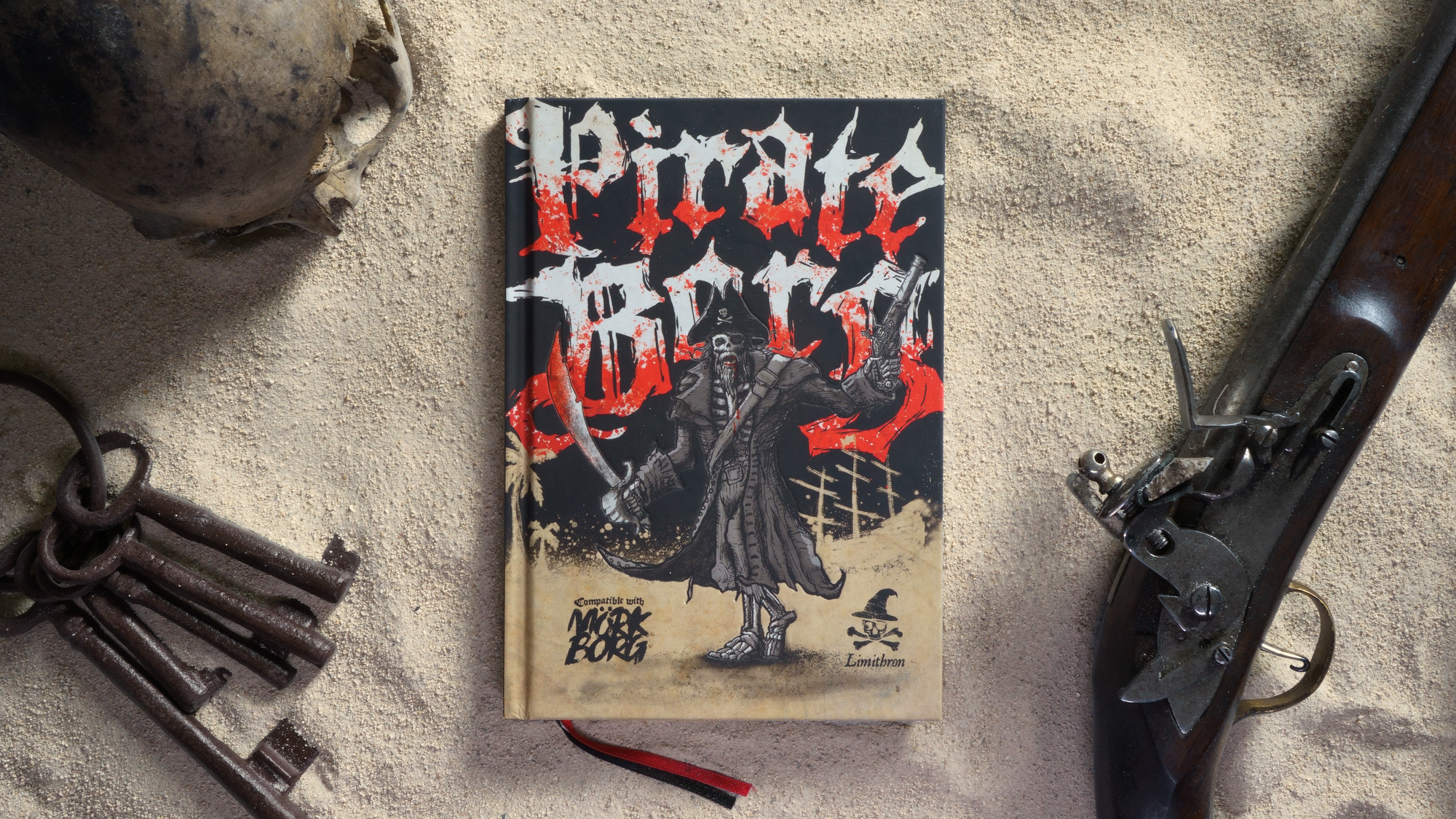
Then there is Pirate Borg. Like its cousin Mörk Borg, this game shoves a dagger into the concept of safe, controlled character creation. What it does is brutal, fast, and ultimately, brilliant. It taught me that the best character creation doesn’t give the player exactly what they want; it gives the Referee (and the player) exactly what the story needs: immediate, messy, and undeniable flavour.
I. The Lesson of Speed: Character as Casualty
In Pirate Borg, character creation takes about 15 minutes. Why is this speed so vital? Because it changes the player’s relationship with the character from ownership to stewardship.
The process is a whirlwind of random tables: you roll for your starting reputation (from “Unknown” to “Infamous”), your defining quirk (a “missing nose” or “smells of cheap rum”), your mandatory debt, and your class. By the time the ink dries, you have a fully formed pirate with a name, a unique vice, and a financial disaster hanging over their head.
This high-speed, high-randomness process teaches two critical lessons:
- Stop Searching for the Perfect Build: When the randomness dictates your starting items, you are instantly forced to play the hand you are dealt. You focus on using your surroundings and wits (player skill) rather than relying on a perfect statistical build (character power).
- Death is Not the End of Investment: When you spend four hours building a character’s backstory and stats, their death is crushing. When a character takes 15 minutes to generate, their death is merely a consequence—a swift lesson in the brutal reality of the world. You’re ready to roll up the next poor sod and move on. This dramatically increases the table’s willingness to take risks.
II. The Lesson of Specificity: Flavour First
The greatest strength of Pirate Borg is its ability to generate an instant, vivid identity using flavour-forward tables. These are not mechanical charts; they are narrative prompts.
Consider the tables that define the character’s appearance and debt. They don’t just give you a number; they give you a story:
- You don’t just have a low Charisma; you have a “face covered in faded, regrettable tattoos.”
- You don’t just owe 100 silver; you owe a local crime boss because “you got caught cheating at cards… on his ship.”
This is the key takeaway for any Referee: Mechanical choices should flow from narrative identity, not the other way around.
I now apply the “Flavour First” principle when running any game:
- Don’t Ask: “What alignment are you?” (A mechanical trap that leads to stale roleplay.)
- Ask Instead: “What is the worst, most regrettable promise you have ever made, and to whom?” (A narrative anchor that grounds their morality in a specific debt.)
These kinds of questions generate a situation that the player must solve, which is the heart of good OSR play.
III. The Lesson of the Starting Anchor
Every Pirate Borg character can be immediately anchored to the world through negative forces: Debt and Enemies.
Every new adventurer needs something specific to chase or escape. Pirate Borg gives them. This is far more compelling than simply starting in a tavern.
- Debt is Motivation: The debt forces the player to take desperate action. They aren’t seeking adventure for vague glory; they need 100 silver right now to avoid losing a limb. This solves the endemic “why are we doing this?” problem for new parties.
- Enemies are Faction Play: By randomly generating a rival pirate captain or a vengeful naval officer, the game immediately creates an adversarial faction. This ensures the player’s actions outside the dungeon have consequences, driving the campaign forward even when the party is ashore.
This is a powerful structural lesson: Equip your characters with baggage, not just swords. A negative tie to the world is infinitely more interesting than a positive one, as it demands action and creates inevitable conflict.
The Pirate Borg approach to character creation is a masterclass in efficiency and consequence. It’s a challenge to both player and referee to stop over-preparing and start playing immediately. Take a page from this book: embrace randomness, force flavour, and let your characters be messy, flawed, and utterly alive—for however long that lasts.
Dive Deeper into the Rotted Seas
If this look at fast, flavourful, and deadly character generation has piqued your interest, I highly recommend checking out the source material. Pirate Borg is published by Limithron, and the fantastic design work—which includes contributions from Luke and his team is a testament to the power of highly focused, lethal design. You can find more information about the game, its supplements, and Limithron’s other projects on their website.